
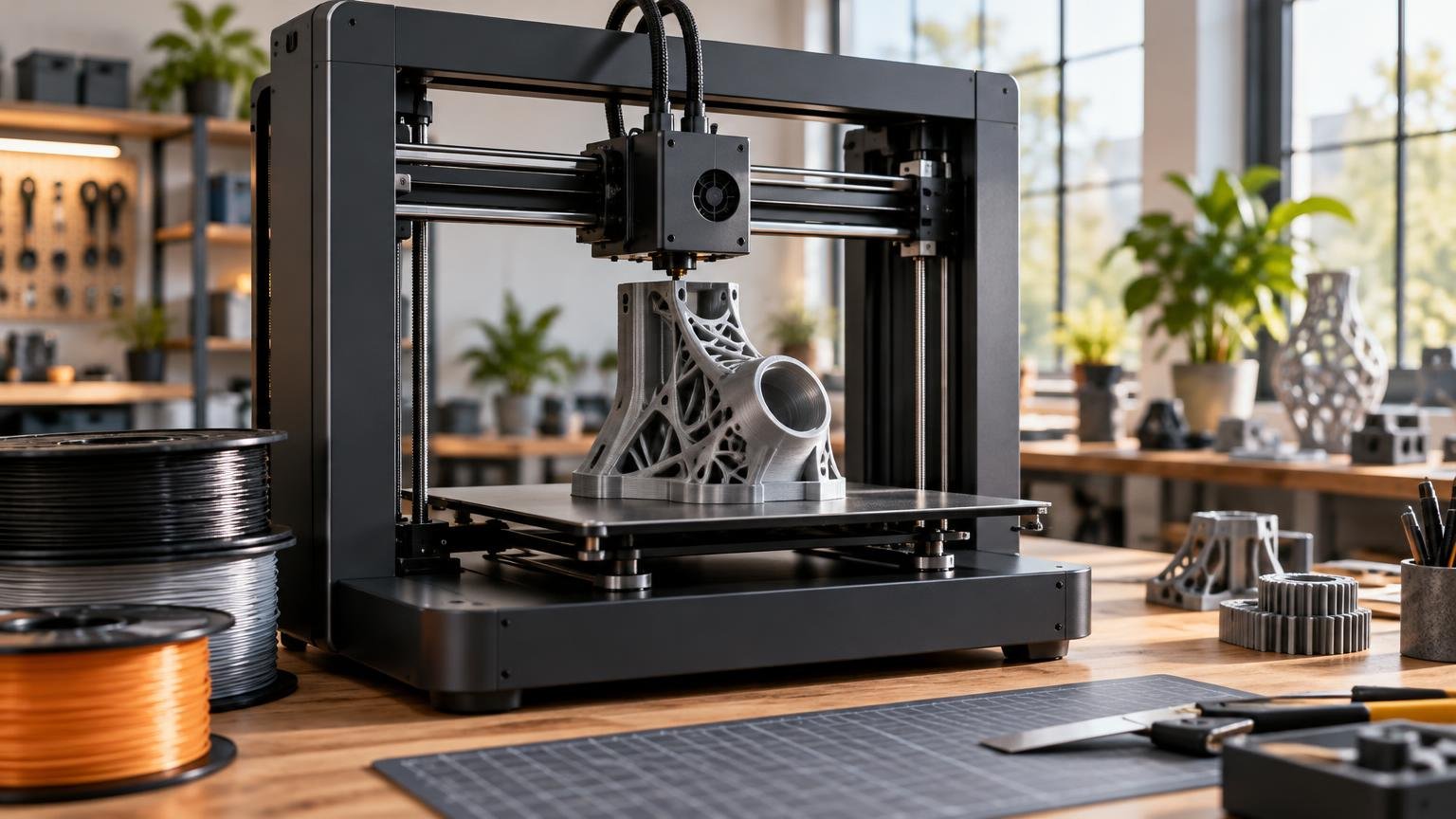
3D Printing News, Technology and Applications
Follow developments in printers, materials, software and additive manufacturing, with context for real-world use. Explore clear analysis for enthusiasts, designers, educators, small manufacturers and industry followers.
3D Printing News, Technology and Applications
3D printing now reaches well beyond desktop machines and experimental prototypes. It includes production tooling, end-use parts, specialized materials, automated print farms, evolving design software, and industrial processes with demanding qualification requirements. 3D Printing Magazine follows this changing field for enthusiasts, prosumers, designers, educators, small manufacturers, and industry readers who want the development as well as its practical significance. The central question is not simply what is new, but what it changes for the people designing, making, teaching, buying, or scaling printed parts.
A specification or announcement rarely tells the whole story. Faster motion does not automatically produce better parts, a new material is not useful without a workable processing window, and a software feature still has to fit the path from model to slice to finished object. Coverage connects technical details to the variables that shape real decisions: reliability, compatibility, repeatability, labor, cost, safety, part requirements, and the effort required to make a workflow dependable.
The publication covers printer hardware and motion systems, filament and resin, slicing and modeling tools, additive-manufacturing processes, business developments, and applications across workshops, classrooms, and production environments. It also considers maker culture and the creator economy around printable objects. The aim is to put each subject in context, distinguish a promising capability from a broadly practical one, and make limitations or unanswered questions visible before they become expensive surprises.
Latest from 3D Printing Magazine

Architecture Models Are Getting Faster, More Detailed, and More Automated
A practical guide to turning architectural CAD and BIM data into legible physical models through scale-aware design, deliberate process selection, segmentation, and hybrid…
Read more
The Economics of 3D-Model Marketplaces: Subscriptions, Files, and Creator Niches
A practical guide to earning from 3D models through individual file sales, memberships, merchant licenses, and niche-focused product strategies.
Read more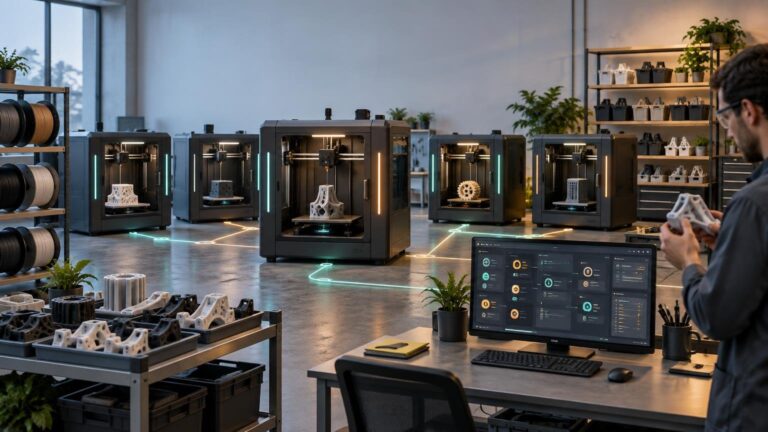
Print-Farm Automation Is Becoming a Software Problem as Much as a Hardware One
A practical framework for automating a 3D printer fleet, from monitoring and job routing to inventory controls, plate handling, and robotic part removal.
Read more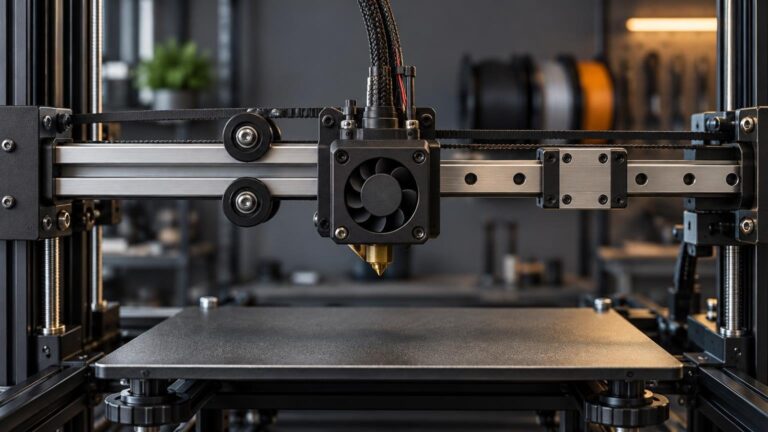
Linear Rails vs V-Wheels: What the Motion Hardware Changes
Linear rails are not an automatic print-quality upgrade. This practical comparison explains when to maintain V-wheels and when a rail conversion may make…
Read moreFrom technical change to practical consequence
Additive manufacturing is a collection of processes, not one universal solution. Consumer FDM, resin printing, powder-bed systems, and other industrial methods solve different problems, while geometry, material behavior, post-processing, and quality controls can matter as much as the machine itself. This publication treats those distinctions as central, looking beyond headline specifications to consider what a development may change for setup, design freedom, throughput, maintenance, inspection, and the people responsible for making the workflow succeed.
Readers can expect clear explanations of unfamiliar terms, grounded comparisons between approaches, and analysis that separates availability from aspiration. New technology and product developments are considered alongside application limits, competitive context, and likely user impact. Whether the question concerns a hardware upgrade, flexible filament, an automated printer fleet, a hybrid manufacturing workflow, or the path toward an approved production part, the useful next step starts in the same place: define the requirement, identify the meaningful constraints, and assess the complete process rather than a single feature.